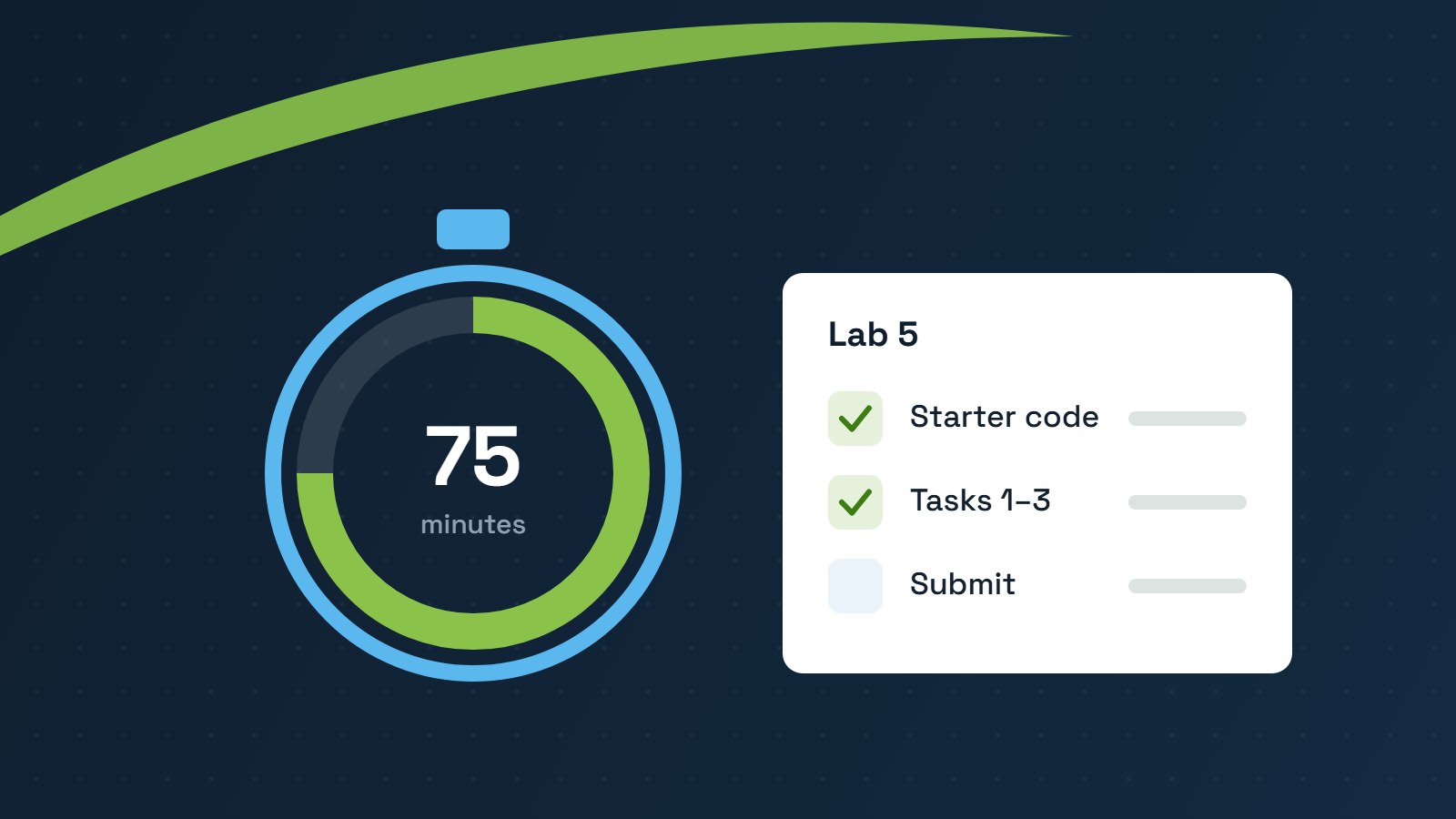
A lab on the timetable is rarely as long as it looks. A 100-minute block quickly becomes 75 minutes once the instructor has re-explained the topic, answered questions and left time for students to submit. When a lab is written for the full block, many students run out of time, take the work home and fall behind.
Start from the time students really have
When we build a lab, we plan it backwards from about 75 minutes of working time, including submission. Each task is tested against that budget. If a lab does not fit, we cut scope rather than ask students to rush.
Independent labs, not one long chain
Many courses use one cumulative project for every lab. It sounds efficient, but one missed week can break the rest of the term for a student. We prefer independent weekly labs built on supplied starter code:
- Each lab focuses on that week’s concept and starts from a working base.
- A student who misses a week can still complete the next lab.
- Integration still happens — through a group project and a lecture demo app that brings the pieces together.
Clear instructions, written for every learner
Lab instructions use plain, direct language with no idioms, so they work for ESL students. Every lab ends with a short checklist of what to submit, so marking is consistent across lab sections and instructors.
The result is simple: more students finish in class, fewer fall behind, and instructors spend lab time helping instead of catching up.